Wasp vs Hornet: How to Tell Which One's Building a Nest in Your Bristol Home
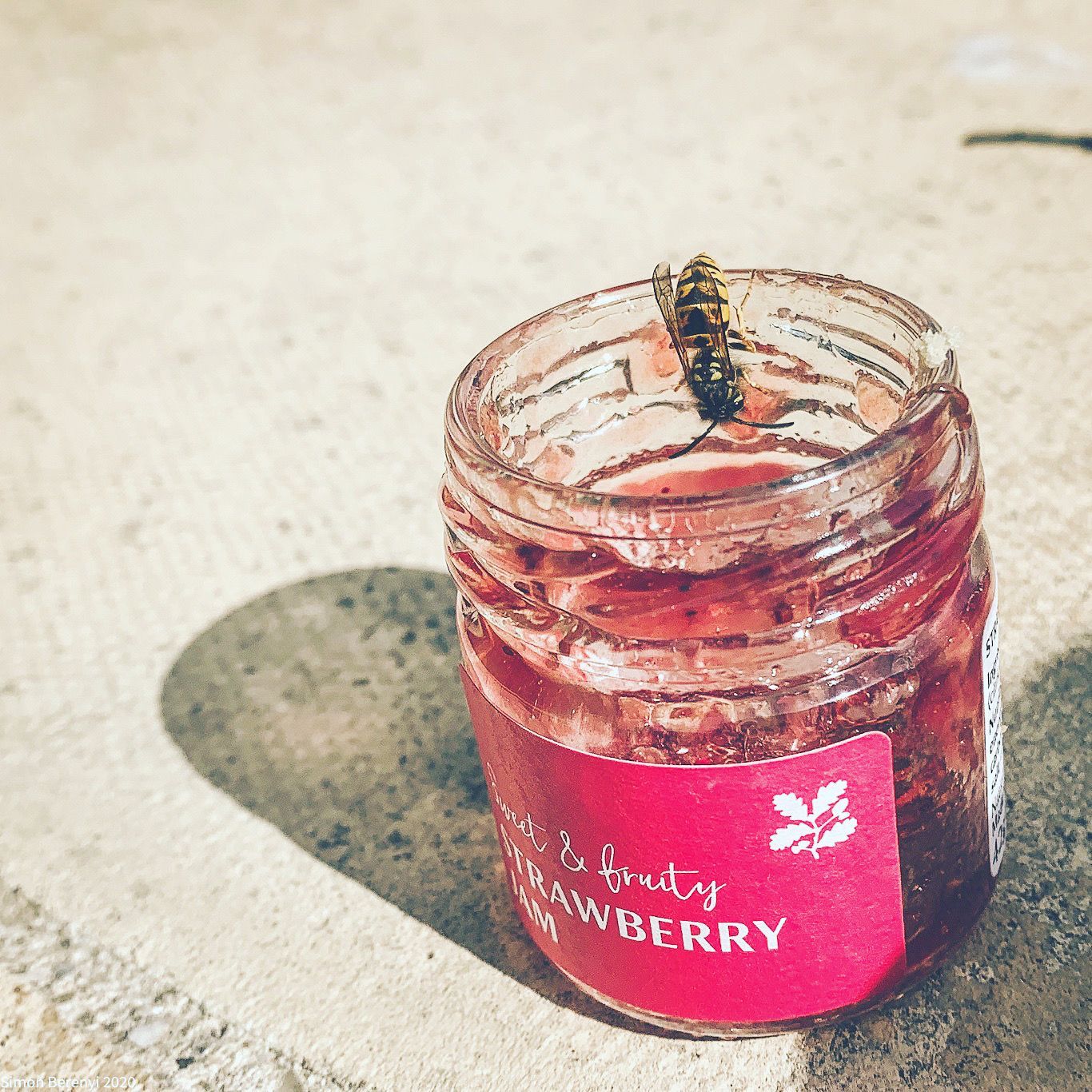
Wasp or hornet? Here are the 3 quickest ways to tell them apart, whether hornets are more dangerous, and how treatment differs between the two.
Quick Answer: In Bristol, the insect building a nest in your loft, shed, or roof space is almost certainly a common wasp — not a hornet. But hornets do exist here, and the two are regularly confused. The three fastest ways to tell them apart: size (hornets are roughly twice the length of a wasp), colour (hornets are reddish-brown and yellow, not the sharp black-and-yellow of a wasp), and behaviour (hornets fly at dusk; wasps don't). Treatment for both follows the same professional method — insecticide applied to the nest entrance — but hornet nests require extra care due to colony size and defensive response.
Every summer, a portion of the calls Pale Horse receives turn out not to be what the caller expected. Someone reports "a huge wasp" — it's a hornet. Someone reports "hornets" — it's a wasp nest with a very healthy colony. The confusion is understandable. Both are large, striped, stinging insects that build papery nests in roof spaces and outbuildings. But they're meaningfully different, and knowing which one you're dealing with affects how worried you should be and what happens next.
Quick Fact: Wasps nests have small entry points, while Hornets' nests are like upturned buckets with huge entrances.
Here's how to tell them apart — quickly and from a safe distance.
Quick Answer: The 3 Visual Differences
You don't need to get close to identify what you're looking at. Three things will tell you almost immediately.
1. Size
This is the most reliable giveaway. The European hornet (Vespa crabro) — the UK's only native hornet species — is significantly larger than a common wasp. Worker hornets measure around 25–30mm; queens can reach 35mm. A common wasp worker is typically 12–17mm. Put plainly, a hornet is roughly twice the length of a wasp. If the insect looks genuinely large — thumb-knuckle to tip — you're looking at a hornet. If it looks like a wasp but slightly bigger than usual, it's probably a wasp queen, not a hornet.
2. Colour
Common wasps (Vespula vulgaris and Vespula germanica) have sharp, high-contrast black-and-yellow banding. European hornets have a noticeably different palette: a reddish-brown thorax (the mid-section), with yellow and brown banding on the abdomen rather than crisp yellow and black. The overall impression is warmer and less vivid than a wasp. If the insect looks orange-ish or auburn rather than bright yellow, it's a hornet.
3. When it's active
European hornets are one of very few social insects in the UK that fly at night. If you're seeing large insects buzzing around exterior lights or open windows after dark in summer, hornets are the almost certain explanation. Common wasps are strictly daytime fliers. This nocturnal activity is often what prompts the first call — a homeowner hears something large hitting a window at 10pm and assumes something is badly wrong.
One additional visual check worth making: look at the legs. This matters particularly if you're ever unsure whether you might be looking at an Asian hornet — an invasive species that the government is actively working to eradicate. Asian hornets have bright yellow leg tips; European hornets have dark/brown legs; common wasps have yellow legs. Asian hornet sightings in the UK are rare and mostly confined to the south-east, but any suspected sighting should be reported via the Asian Hornet Watch app rather than treated as a standard pest control job.
Are European Hornets in Bristol Dangerous?
The short answer is: less aggressive than wasps, but not something to disturb.
European hornets have a reputation that exceeds their actual threat level. Most pest controllers will tell you that the majority of hornet call-outs are driven by a single factor — size. A large insect triggers alarm even when it's behaving entirely normally. In reality, European hornets are generally less confrontational than common wasps. They're not interested in your lunch, they don't mob picnic tables, and a single hornet flying through a room is not an emergency.
That said, they are defensive of their nest, and the response when a colony is disturbed is more intense than you'd get from wasps. A mature hornet colony can contain several hundred workers. Disturb one accidentally — a loft hatch opened near a nest, a maintenance operative working on a soffit — and you'll encounter a forceful defensive response.
The sting is also more painful than a wasp sting, a straightforward consequence of a larger insect delivering more venom per strike.
Bristol has a good population of European hornets, particularly in areas with established woodlands, mature gardens, and older housing stock with accessible roof voids. Clifton, Redland, Sneyd Park, and the Avon Gorge fringe are among the areas where hornets are more frequently reported — but they turn up anywhere that offers suitable nesting cavities. Their season runs from around May to November, with peak nest size and activity in August and September.
If you spot a large, reddish-brown insect moving in and out of a consistent point in your roof space or outbuilding, it warrants a call. Don't attempt to inspect the entrance closely, block it, or treat it yourself.
Does the Treatment Differ?
Broadly, no — the treatment method is the same. Both wasp and hornet nests are treated with professional-grade insecticide applied to the nest entrance. Workers returning to and leaving the nest carry the treatment into the colony, and the nest dies off over 24–48 hours. The same trained technician, the same protective equipment, the same professional approach.
Where hornet jobs require additional consideration:
Nest location. European hornets strongly favour enclosed cavities — roof voids, hollow trees, wall spaces, and chimneys. This is different from wasp nests, which can also turn up in the open (under roof tiles, in garden furniture, in the ground). A hornet nest in a chimney or deep within a roof structure requires careful access management.
Colony response. Hornets are more likely than wasps to mount an active defence during treatment if they detect a threat to the nest. A professional working on a hornet nest in an enclosed space needs appropriate PPE and experience. This is not a job for over-the-counter spray applied through a loft hatch.
Timing. European hornets are active into dusk, unlike common wasps which return to the nest earlier. For hornets, early morning is generally the optimal treatment window, when the maximum number of workers are in the nest and the colony is least active.
Cost. At Pale Horse, hornet nest removal is priced slightly above standard wasp nest removal, reflecting the additional complexity and protective requirements. If you're in Bristol or Bath and you're not sure what you're dealing with, a call or photo sent through our contact page is all it takes to get a clear answer before any visit.
The bottom line for most Bristol homeowners is this: if something is building a nest in your loft or outbuilding, it's statistically far more likely to be a wasp than a hornet. But if the insect is large, reddish-brown, and active at night, you may well have a hornet colony — and that's still something you want dealt with by someone who knows what they're doing.
Either way, get in touch with Pale Horse Pest Control. We'll identify what you've got and advise on the right approach — without any unnecessary alarm in either direction.
Pale Horse Pest Control is BPCA-accredited and serves Bristol, Bath, and the surrounding area. For wasp and hornet nest removal, visit
palehorsepestcontrol.uk. Call:
01173699909